
We went here first at the end of July last year when it was drying out so there were few flowers out - even so, there were plenty of butterflies about. We wanted to see what it was like here through the spring so we set off one day last week when the weather was fine and mild, and had a lovely few hours. I took tons of photos of course, so I will just mostly caption them and try not to type too much blurb! 😀

It was lovely to see the swathes of low growing early spring flowers; above Lesser Celandine gives a lovely sunny glow to the sides of the path.
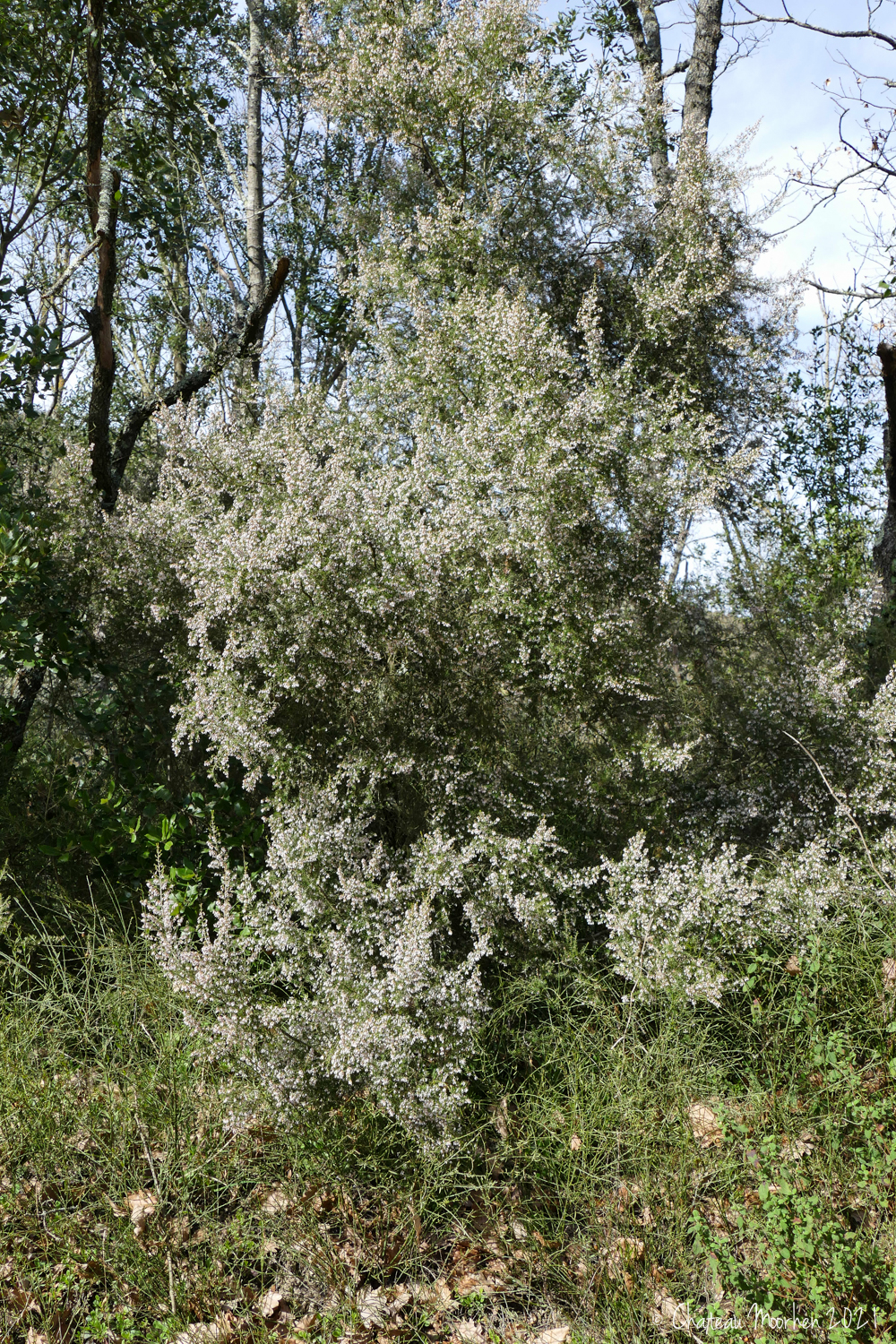
What's so interesting for us around here is the mixture of plants that we are familiar with, and ones which are more Mediterranean such as this Tree Heather. There are also a mix of four species of native oaks in this forest, plus the introduced American Red Oak. At the very beginning of the walk, where it is quite open and sunny, there is a little patch of typical garrigue plants - Kermes Oak, which is a short, shrub like ivy-looking evergreen oak, and some Cistus Rock Roses, amongst others.
The following plants are ones that are common in northern Europe, notably - Pulmonaria:

Vinca mixed in with the Lesser Celandine:

and Cuckoo Flower/Lady's Smock (Cardamine pratensis):

It was a day of firsts - the first Chiffchaffs and Blackcaps heard singing, and then the first Orange Tip butterfly spotted. I was a fair distance from it but was using my Lumix bridge camera zoomed in rather than my SX50 which I use for macro. I stood around focussing on the flowers as the butterfly kept coming back so was able to get several shots in flight - not as sharp as I would have liked but I didn't want to change the settings for a faster speed and miss out on shooting the butterfly!


I managed the same with this male Brimstone - in the second picture it is just coming into land. You don't normally see their wings open as they always hold them closed when not in flight.


If I'd been on my own I would have spent more time trying to shoot the many Bee Flies buzzing around, but K was always 20 paces ahead of me waiting for me. 😂 You can just see one resting in the middle of the leaf and another half hidden behind grass on the left of the leaf.

Part way around the track swathes of Wood Anemones appeared in amongst the Celandine.

There was tons of Lady's Smock/Cuckoo Flower as well, but we didn't hear any Cuckoos!


One of the many information boards giving info about the plants found in the forest.

At this point we took a detour way down to the valley floor to the tiny stream and even tinier 'waterfall', which was only about 10 foot high and even after a winter's worth of rain, still only a trickle. Barely worth taking a photo of! Nice to see some streams flowing though as so many of them are dried out in summer. Down near the stream where it was damper and darker there were a few different plants, notably this parasitic plant called Purple Toothwort. It's very funky!

Cowslip:

Anemone hepatica:


On the loop coming back there were the first Merisier (Wild Cherry) trees flowering. The lower growing saplings always start flowering first.


Back at the car park there is a wealth of information given about this area. This is a photo I took last summer, but I wanted to show the info given for anyone reading this who might be wanting to do the walk. The other day these bugs in the next photo were all over the wood!

These are Lygaeus equestris, a species of ground bug, commonly known as - wait for it - Black-and-Red Bugs. What, really? I wonder why? 😂😂😂

I hope to visit at least once more during the springtime to record the flora and butterflies in this little patch of paradise.


